Sometimes. Courts start from the rule that the shipper owes the freight charges unless the bill of lading says otherwise. In Oak Harbor v. Sears, a federal appeals court held the shipper still owed the carrier after paying the broker. A signed nonrecourse clause or the carrier's own conduct can change that, so ask an attorney.
We are not attorneys and this is not legal advice. It is general education to help you understand your paperwork and know what to bring to a lawyer.
Who is responsible for freight charges on a bill of lading?
The shipper, also called the consignor, is generally the party responsible for freight charges, unless the bill of lading or another agreement says otherwise. The U.S. Supreme Court has said that unless the bill provides otherwise, "the consignor remains primarily liable for the freight charges." Parties can change that by contract, and the bill's terms matter.
That is why the bill of lading is more than a pickup receipt. It is a contract for the movement of the freight, and the boxes checked and signed on it can decide who owes the money when a broker doesn't pay.
What happened in Oak Harbor v. Sears?
In Oak Harbor Freight Lines v. Sears Roebuck, a carrier hauled freight for Sears that was arranged through a broker. Sears ended its relationship with the broker, and the carrier was owed more than $400,000. Sears had paid the broker part of that money. The Ninth Circuit held Sears and the broker jointly responsible for the full amount owed to the carrier.
The court's reasoning, in plain terms:
- The broker was not a party to the bill of lading, so Sears's contract with the broker couldn't erase Sears's responsibility under the bill.
- The bills of lading carried the standard terms and had no signed nonrecourse clause.
- When a shipper chooses to pay through a broker, the shipper carries the risk that the broker won't pass the money on. The shipper is in the best position to avoid paying twice, by choosing a reliable broker, contracting with the carrier, or paying the carrier directly.
The court also rejected Sears's argument that it shouldn't have to pay twice.
What are the limits of the Oak Harbor decision?
Oak Harbor is a Ninth Circuit decision, binding in the western states that circuit covers. Several other federal circuits have reached similar results, but outcomes depend on the facts. The decision turned on the bill of lading terms, the absence of a signed nonrecourse clause, and a carrier that sought payment promptly and didn't mislead the shipper. Different paperwork can mean a different result.
What is the Section 7 nonrecourse clause?
Section 7 is a box on the standard straight bill of lading. If the shipper signs it, the shipper is saying the carrier should not deliver without collecting its freight charges, usually from the consignee. If the carrier then delivers without collecting, the shipper is generally not liable for those charges. A signed Section 7 is one of the main ways a shipper avoids paying the carrier directly.
Check every bill of lading for that load. Was Section 7 signed? Is the freight marked "prepaid" or "collect"? Who is listed in the "bill to" box? Those answers shape what an attorney can do.
When can a shipper avoid paying the carrier?
A shipper may avoid liability when it signed the Section 7 nonrecourse clause, when the bill's terms or a separate agreement shifted responsibility, or when the carrier's own conduct misled the shipper into paying someone else. In one Sixth Circuit case, a carrier lost because its own bills told the shipper to pay a forwarder, and it billed months late.
The lessons for carriers: bill promptly, don't extend credit you shouldn't, ask for payment directly as soon as a broker stops paying, and keep your communications with the shipper factual and in writing.
How long does a carrier have to collect freight charges?
Federal law gives a carrier 18 months to file a lawsuit to recover its charges. Under 49 U.S.C. 14705, the clock starts when the carrier delivers or offers to deliver the freight. Claims like these are generally handled as contract claims in state court, which is another reason to talk to an attorney well before the deadline.
Can I hold the freight until I'm paid?
Be very careful. A carrier's lien under the Uniform Commercial Code exists only while the carrier still has the goods, and it is lost once the carrier voluntarily delivers them. And FMCSA's fraud guidance warns that holding loads hostage until you get paid is illegal. Don't hold freight to force payment without an attorney's advice.
What about the broker's bond or trust?
A broker bond or trust claim runs alongside any claim against the shipper. Every licensed broker must keep $75,000 in financial security through a BMC-84 surety bond or BMC-85 trust. When a broker fails financially, FMCSA publishes a notice, and the surety must accept claims for 60 days. If claims exceed $75,000, they may be paid pro rata. File early and keep copies.
Our guide to broker nonpayment and bond claims explains how to find the surety and prepare the claim. If the broker that hired you was posing as someone else, see what to do about carrier and broker identity theft. If the broker that hired you had no broker authority at all, see double brokering vs. co-brokering.
What should I bring to a transportation attorney?
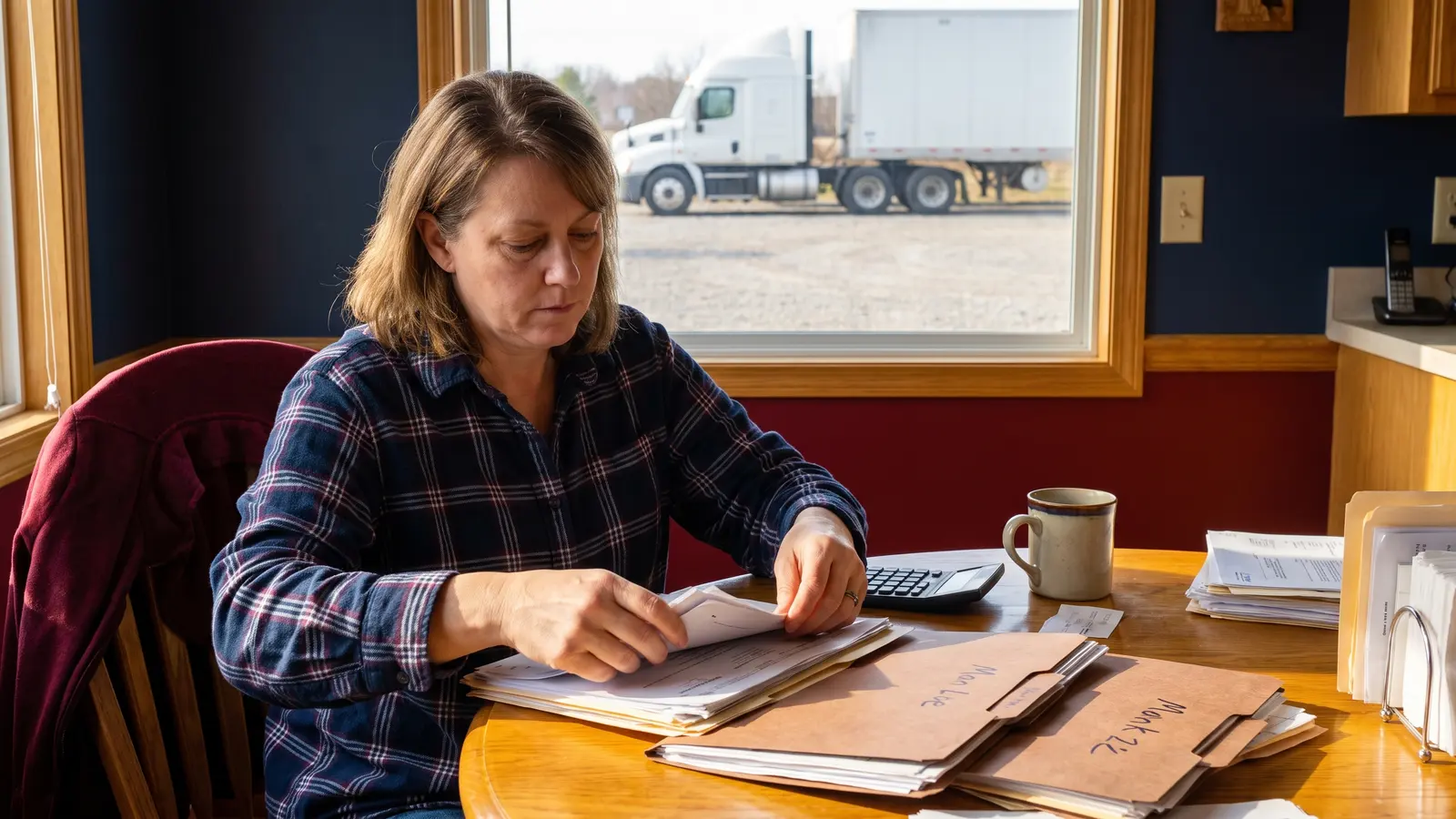
Bring a complete, organized file: every bill of lading, your rate confirmations and agreement, proof of delivery, invoices, payment history, and every message with the broker and shipper. An attorney can move much faster on a clean file than on a stack of loose paperwork, and it costs you less of their time.
- Every bill of lading for the loads, front and back, showing signatures, the Section 7 box and freight terms
- Rate confirmations and the broker-carrier agreement
- Proof of delivery for each load
- Your invoices, statements and payment history
- All emails, texts and letters with the broker and the shipper, with dates
- Any demand letters you sent and the replies
- The broker's MC number, its bond or trust information, and any FMCSA notice about it
- A short timeline from pickup to today
File a free complaint and we'll help you organize the case, contact the broker for its side, and, if the case needs a lawyer, connect you with a carrier-first attorney through the National Transportation Attorney Network. To keep invoices and collections from slipping in the first place, Logistical Forwarding Solutions offers back office support for small carriers.